

The relentless pursuit of “breaking news” has transformed the way Australians consume journalism, blurring the line between what is genuinely important and what is merely happening. With trust in news continuing to erode, and new research revealing that 41 percent of teenagers source their news through AI, is the industry’s obsession with being first - and turning every incremental development into “breaking news” - part of a broken business model that needs a rethink?
There was a time when breaking news meant something had actually broken. A government had fallen. A plane carrying hundreds of passengers had crashed. A precedent-setting court decision had been handed down. Something had happened that changed what we knew about the world.
WANT MORE ANALYSIS ON HOW TO BREAK DOWN BROKEN NEWS?
Now, a politician says something innocuous, a celebrity posts something, police issue a statement about a convenience store being robbed, and within minutes, there is a push notification, a television cross, a TikTok video and a dozen breathless takes.
BREAKING. The word is everywhere, and that is precisely the problem because it’s now an assortment of letters rather than a word that commands audiences to take note let alone trust what comes next.
Australia's news cycle has mutated from 24-hours into something closer to 24 seconds.
The transformation was already well underway around 2010. Twitter was becoming a newsroom in its own right, allowing journalists to publish fragments of information in real time. As a former crime reporter, I used BREAKING in posts more times than I can count. That same year, the ABC launched News 24, promising Australians a dedicated 24-hour news channel.
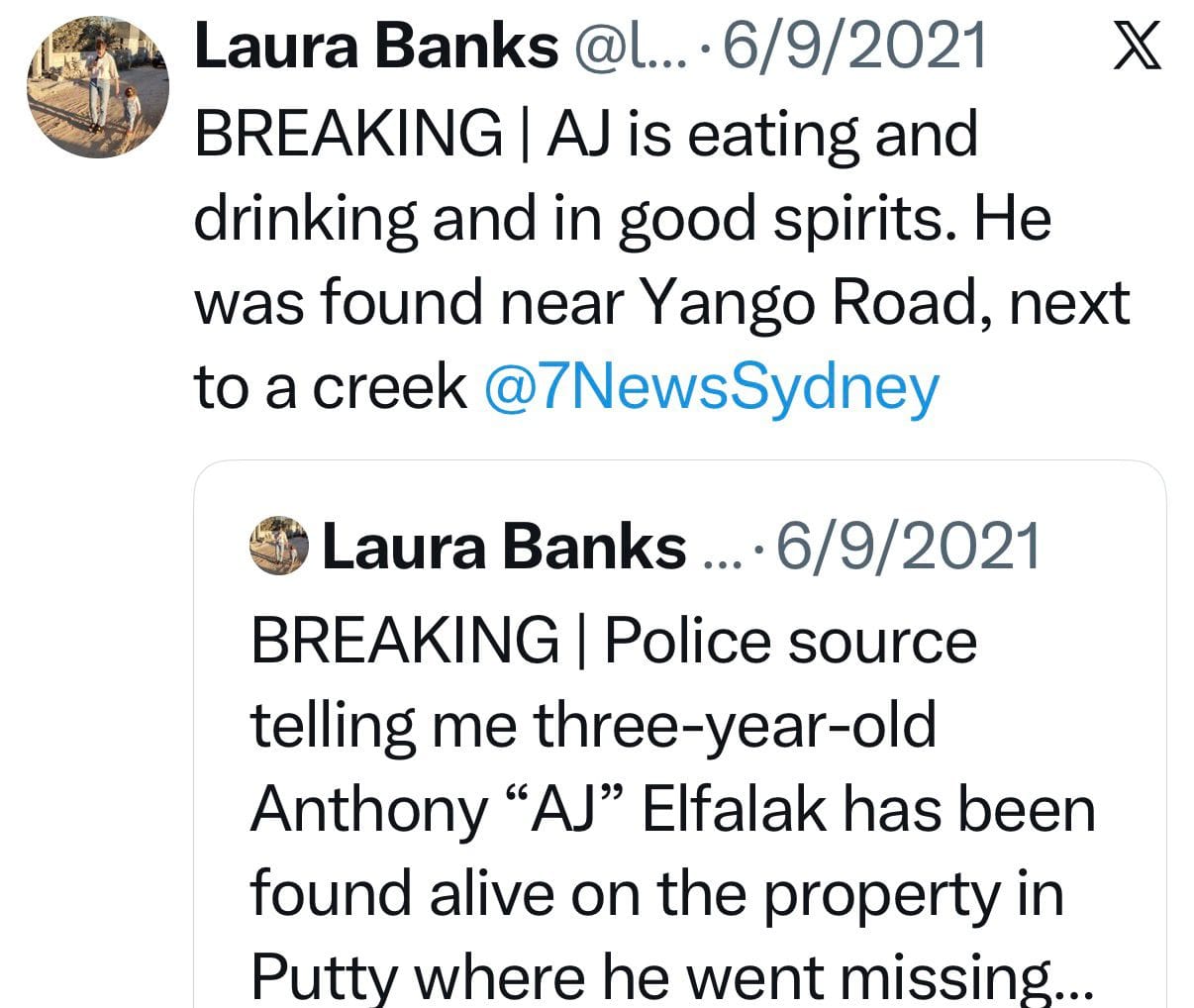
The logic was simple: if something happened, you could watch it happen. But it also changed what audiences expected from journalism. We no longer had to wait for the bulletin or the newspaper to be printed; the bulletin had to keep up with us.
This isn't an argument that news organisations shouldn't report breaking news. Of course they should, but the problem is that the label has become so ubiquitous it risks losing its meaning.
This week, News 24’s Sharri Markson again offered a case study in the elastic use of “breaking”, posting; “I’ve got some breaking news; Aussie legend Dawn Fraser has entered the debate about the Royal Commission”. The news was that 88 year old swimming icon doesn't think it passes the “pub test”.
And the problem isn't confined to sensationalist media. The ABC labelled its coverage of Australia's latest GDP figures “Breaking”, despite the news being a set of economic data that still required interpretation and gets published every three months. During a recent live political blog, The Guardian described a new government gambling-ad proposal as “breaking into question time with some breaking news”.
But this isn't really about Markson, or The Guardian or the ABC, if we make it about one journalist or one outlet, we miss the bigger story. The problem is the incentive structure. News organisations are competing against TikTok, YouTube, podcasts, influencers, newsletters and now AI systems that can summarise events almost instantaneously.
The pressure on newsrooms is obvious.
Watch the latest episode of We Used To Be Journos
Get there first. Get the notification out. Get the headline up. Get the audience before someone else does. It doesn’t seem to matter that much if you get it wrong, send another breaking alert with new (more accurate) information. But being first, being accurate let alone being useful, are different things.
A court hearing is not a verdict and an allegation is not a finding. A politician making a claim is not evidence that the claim is true. Yet the breaking-news format compresses all of these distinctions. Suddenly we are not covering the event; we are covering everyone's reaction to everyone's reaction to the event. Then another notification arrives. BREAKING.
The consequences go directly to trust. The latest research on Australian news consumption should make the industry uncomfortable.
The 2026 Digital News Report Australia found overall trust in news at 43 per cent, while 68 per cent of Australians said they avoid news at least sometimes. Seventy-seven per cent are concerned about misinformation online.
A study jointly published by the University of Canberra, Queensland University of Technology and Western Sydney University this week, found that 41 per cent of surveyed Australian teenagers aged 13 to 17 get news from AI.
That should stop the industry in its tracks, because the problem is not that journalism has become too fast; it is that the audience is finding ways to bypass journalism altogether.
For years, the media industry responded to social media by becoming faster, more urgent and more constant, but AI now makes speed almost meaningless.
Journalism was never supposed to be simply about telling people that something happened. Its value is establishing whether it happened, explaining what it means, why it could have been avoided, providing context, testing competing claims, challenging power - as well as telling audiences what we still don't know.
That is a different proposition to this seemingly endless race to be first and be everywhere, and it may be journalism's best defence against both social media and the often confident hallucinations of AI chatbots..
Judgment. Verification. Context. Proportion. The confidence to say, “we don't know yet”. As Antoinette noted in this week’s episode of We Used To Be Journos, there’s a case for more outlets proudly owning the tagline “News done slowly” as their differentiator and a way to rebuild audience trust.
The industry cannot rewind to 2010, let alone 1995. Social media isn't going away and neither is AI, the answer cannot be to pretend the old news cycle is coming back.
If journalism wants to remain relevant when a teenager can ask an AI chatbot what happened anywhere in the world and receive an answer in seconds, it needs to offer something better than speed. It needs to offer reasons to trust the answer, and that is what is most broken – it's beyond breaking.
Laura Banks is an award winning reporter, the former health editor at Sydney Morning Herald and has also worked as a crime and courts reporter at Seven News and The Daily Telegraph.