
Skip to content

Women linked to ISIS are facing charges. Why aren’t Australians who fight in the IDF?

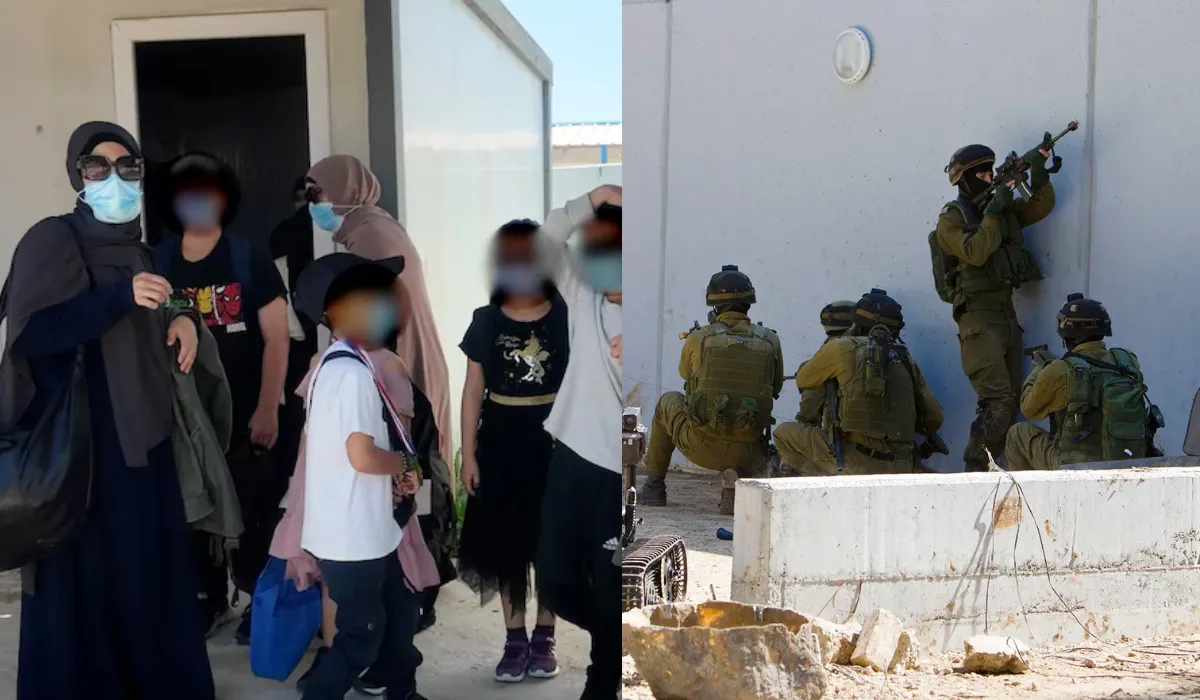
Australians who fight for Israel are free to enter the country with almost no scrutiny after possibly committing war crimes, but the women who married ISIS members and travelled to Syria face arrest once the plane touches down. We asked experts why.

Image: ABC News, Reuters/Alamy

By Soaliha Iqbal

A group of Australian women and their children — aged as young as six — landed in Australia overnight after spending years in Syrian refugee camps. The first cohort — included four women and nine children.

These women — reduced to the name ‘ISIS brides’ by parts of the media and political class— have been the subject of an increasing frenzy over the past few months. This includes calls from politicians, some news outlets and individuals to revoke their citizenship or block their entry.

What legacy media has failed to interrogate, though, are the similarities and differences between these women and the Australians who chose to fight with the Israeli army during its ongoing genocide in Gaza and attacks on Lebanon and Iran.

Why are they free to enter the country with almost no scrutiny after possibly committing war crimes, given some of these women were arrested once their planes touched down?

It’s a question that many of the Etterati have asked us, and so we’ve deferred to two experts in international law and terrorism.

ASK AN ETTE-SPERT: We took your questions to Dr Mariam Farida from Macquarie University and Dr Se Youn Park from Women in International Security (WIIS).

Support independent media. Join the Etterati

BECOME A SUBSCRIBER

Over the last few years, and particularly in the last few months, there has been much discourse around whether the women accused of being members of ISIS should be “allowed” to enter Australia. Some quarters of the press have even called for their citizenships to be revoked.

Dr Se Youn Park, Director of Research at Women in International Security (WIIS), told Ette Media that it’s important to remember these women and their children are Australian citizens, and therefore Australia has a legal responsibility to them. 

This post is for paying subscribers only

Subscribe

Already have an account? Sign In

Latest

Responding to the comments section

Responding to the comments section

In this episode Jan and Antoinette respond directly to feedback from the Etterati. We answer questions about the language used to describe certain “regimes,” balance in journalism, why we talk about Gaza and whether we laugh too much about dark subject matters. Plus: what happens when journalists we’ve scrutinised

Members Public
Feedback, complaints and hate mail: how we respond to our audience

Feedback, complaints and hate mail: how we respond to our audience

In this episode Jan and Antoinette respond directly to feedback from the Etterati. We answer questions about the language used to describe certain “regimes,” balance in journalism, why we talk about Gaza and whether we laugh too much about dark subject matters. Plus: what happens when journalists we’ve scrutinised

Members Public
Respond to comments about Iran

Respond to comments about Iran

Sorting through the fan (and hate mail), constructive feedback from colleagues, and everything in between, Jan Fran and Antoinette address some of the most common feedback they get from listeners. Listen to We Used To Be Journos wherever you get your podcasts or watch in full on YouTube.

Members Public