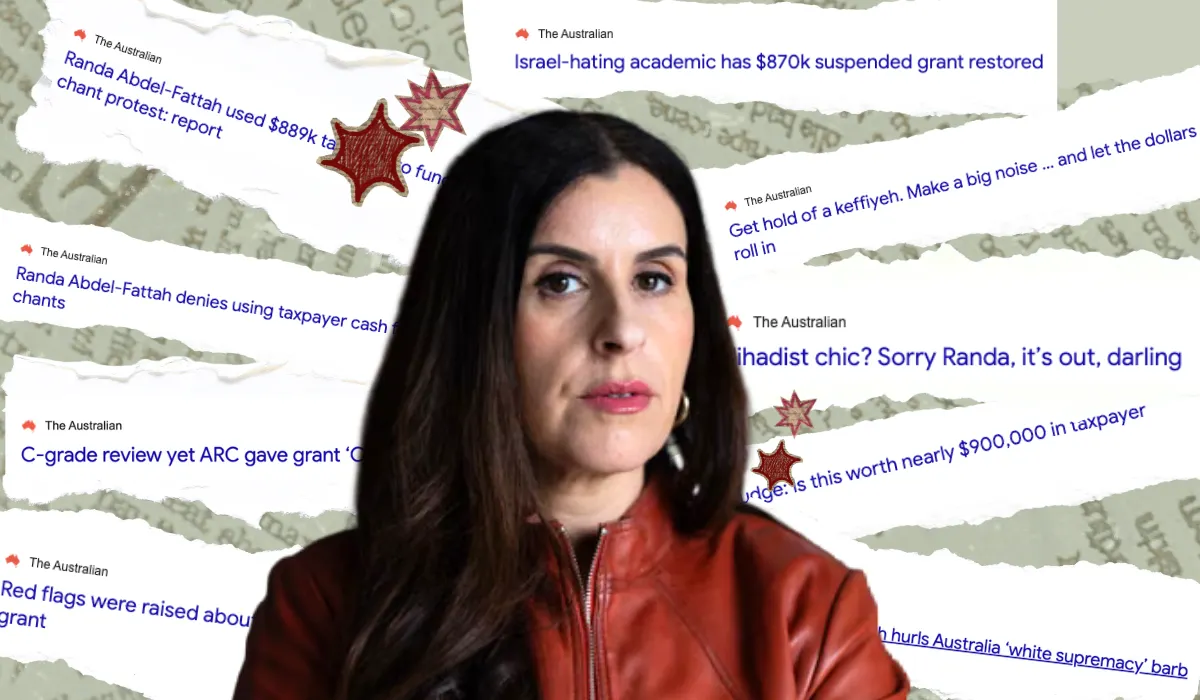
Inside the relentless campaign by The Australian newspaper to discredit a leading voice on Palestine.
A sweeping data investigation reveals what appears to be a sustained and coordinated media offensive by News Corp’s The Australian targeting Palestinian-Egyptian academic and author Dr Randa Abdel-Fattah.
The 30-month media blitz combined inflammatory language, saturation coverage, and relentless front-page placement—appearing designed to undermine her credibility, influence decision-makers, derail her career, and curb her advocacy for Palestinian human rights.
This investigation, by journalist Antoinette Lattouf (Ette Media co-founder) and data analyst and mathematician Dr Richard Bean, used ProQuest’s Australian newspapers database and examined articles published between October 2023 and April 2026 that featured or referenced Randa Abdel-Fattah.
Findings: The Australian outpaces all other outlets combined
Between October 7, 2023, and April 9, 2026, The Australian alone published 412 unique articles featuring or referencing Abdel-Fattah. This is more than Nine newspapers, ABC News online, The Guardian, and Australian Community Media’s Canberra Times, Newcastle Herald and Bendigo Advertiser newspapers COMBINED, which amounted to 399 articles.
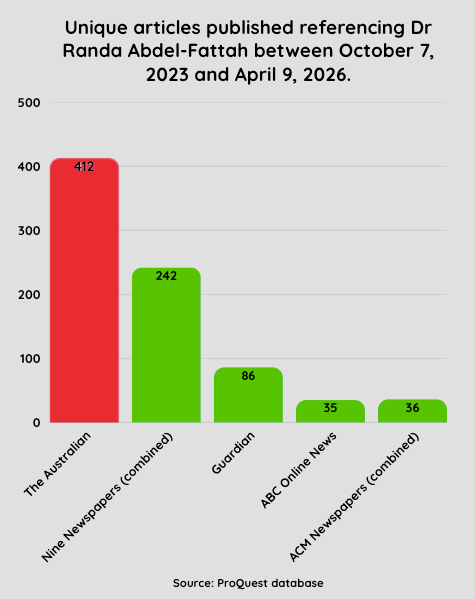
The Australian (412) also ran more articles on Abdel-Fattah than all other News Corp (276) titles combined, and more than four times that of the Guardian.
While The Australian dominated coverage with 412 articles, Nine newspapers had 242 articles combined across its titles, Guardian had 86 articles, ABC Online News had 35, and ACM newspapers had 36 articles in total.
Even after two festival dis-invitations backfired into boycott and collapse and a 10-month Australian Research Council (ARC) investigation (prompted by education minister Jason Clare) cleared Abdel-Fattah and restored her grant, The Australian’s campaign continued.
Ette Media contacted editors at The Australian for comment on these findings. We are yet to receive a response.
Listen to our bonus podcast episode on this investigation.
Front-page fixation: when coverage becomes a campaign
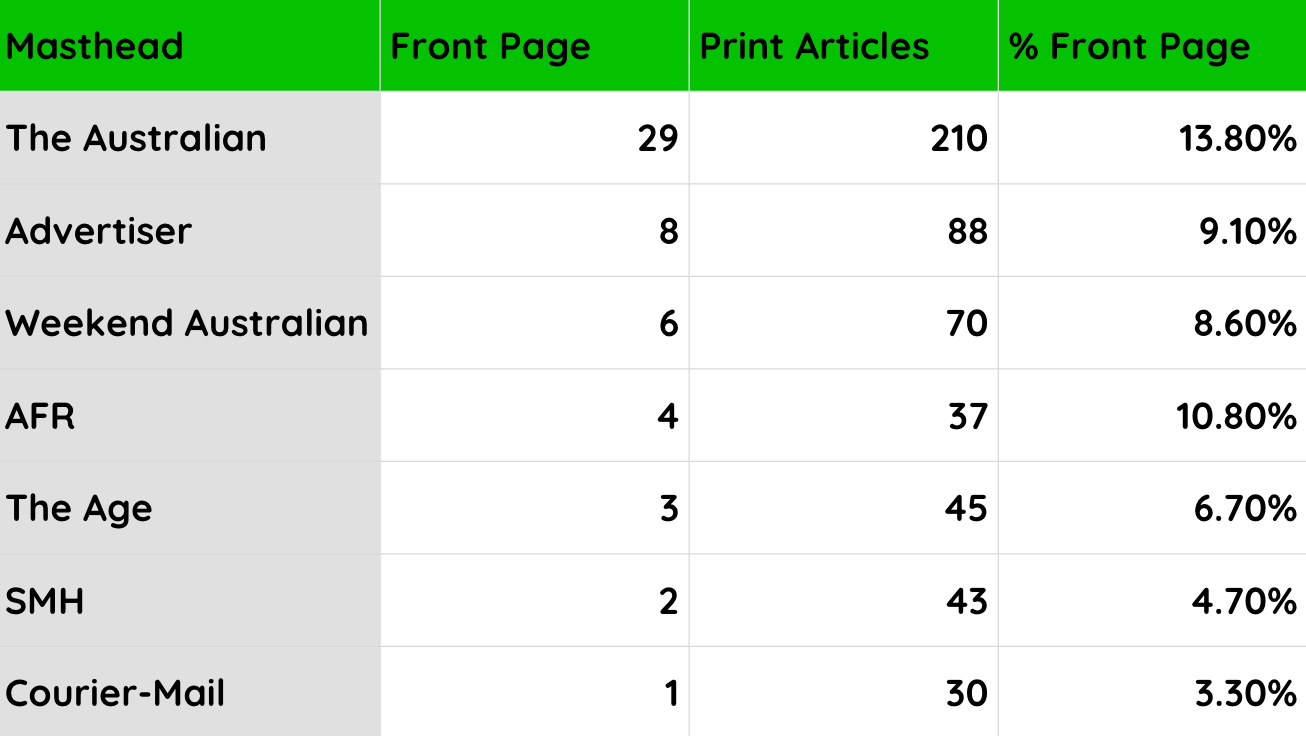
The front page tells its own story. Across the analysis period, The Australian and The Weekend Australian ran 35 front-page stories on Abdel-Fattah, accounting for almost 14% of The Australian’s articles in print on the academic.
Compare that to the print editions of:
- The Age + Sydney Morning Herald: five front page stories combined
- Australian Financial Review: four front page stories
- Adelaide Advertiser: eight front page stories
“The campaign against me exposes a disturbing pipeline between Murdoch media and political decision-making,” Abdel-Fattah told Ette Media.
“The Australian’s reporting has materially shaped actions taken against me—from Jason Clare directing the ARC to investigate my grant, to the ARC and Macquarie University initiating investigations and suspending my fellowship.”
Independent media matters. We've opened this article and investigation to non-subscribers. Our supporters make this work possible.
The front-page framing
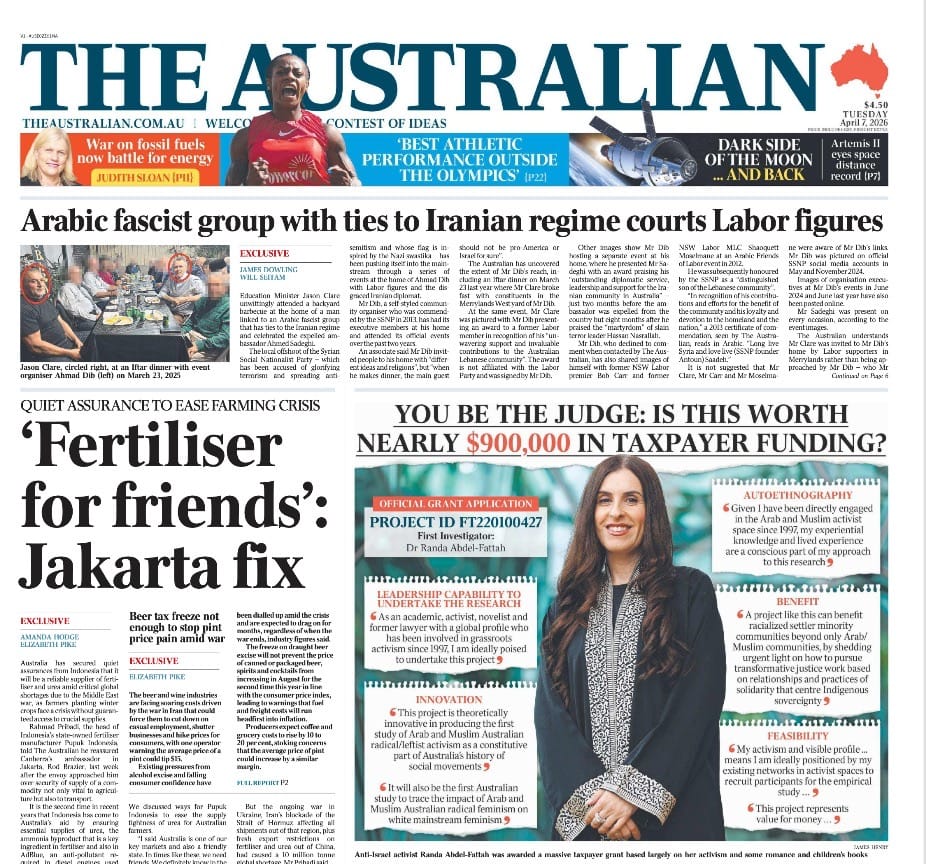
Here are some examples of countless front page stories The Australian dedicated to Abdel-Fattah:
- “Anti-Israel academic's taxpayer grant frozen”
- “Taxpayer-funded anti-Israel writer blasts academics”
- “University symposium courts anti-Israel critics”
- “These are the faces of a hideous hatred that has no place in our country”
- “End Israel academic gets $870k”
- “Randa Abdel-Fattah's $889,000 grant awarded by ARC despite C-grade review and formal warnings”
Even after official university findings cleared her, the narrative didn’t shift at The Australian.
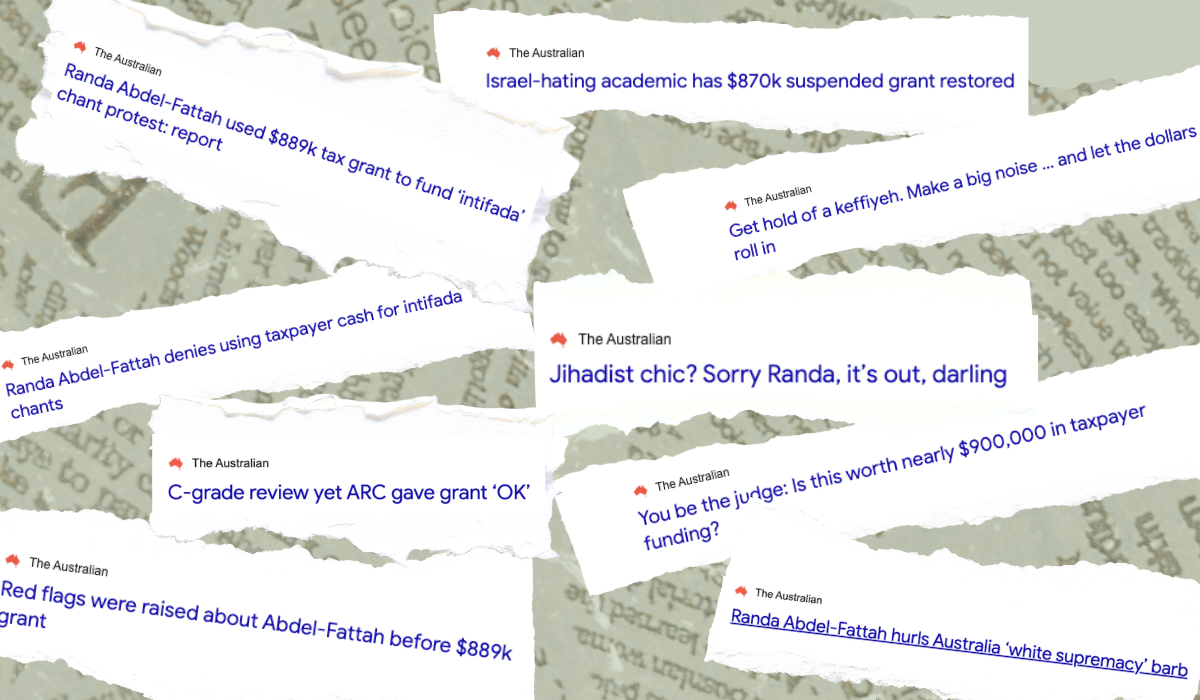
In December 2025, after a months-long investigation into her ARC Future Fellowship, Abdel-Fattah was cleared of any wrongdoing — yet The Australian kept pushing “exclusive” front-page stories about the same grant well into April 2026.
Watch Antoinette and Jan Fran discuss the findings.
Questions were put to The Australian, asking editors to explain their decision-making processes given the ARC investigation findings.
Abdel-Fattah believes she’s being positioned as a cautionary tale for anyone who dares to "speak out against the Israeli regime".
“The Australian’s coordinated and relentless editorial campaign against me is pursuing a clear agenda: to destroy my academic career and cast me as a liability, someone whose mere association will expose institutions and employers to sustained attack,” she told Ette Media.
“The pervasive lies, the deliberate misquoting of my words, and the distortion of facts have been outrageous, particularly as they intensified after a 10-month, exhaustive investigation fully exonerated me.
“The strain on me and my family has been immense. I’ve had death and rape threats, been openly defamed, isolated at work. And why? Because I refuse to be silent over my people’s genocide.”
Loaded language
A deep dive into sensationalist headline language uncovers a clear pattern that overwhelmingly points to News Corp.
One or more of the ten highly charged words (listed below) appear in headlines that identify, with more than 90% accuracy, News Corp articles where Abdel-Fattah is the article subject. This means if one or more of these words appears in a headline on a article about Dr Randa Abdel-Fattah, there is a very high probability it's a News Corp article.
They words are: Hamas, intifada, anti-semitism, taxpayer, racist, hatred, chaos, horror, elite, slur.
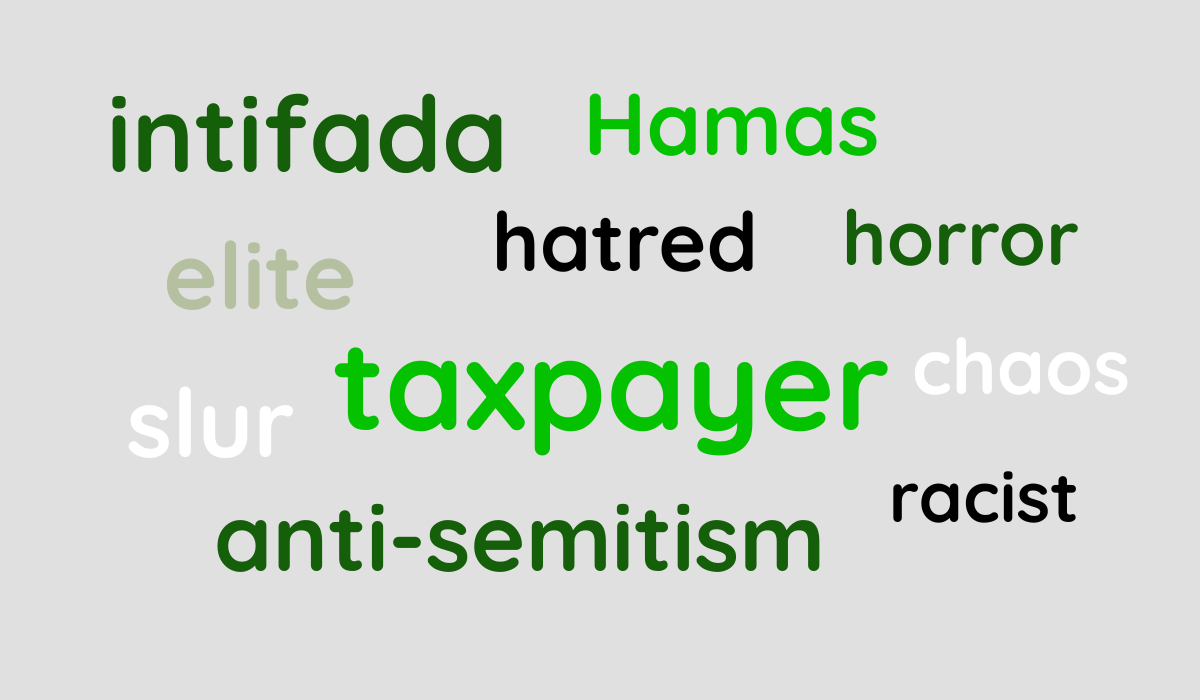
One or more of these words appeared in 90 News Corp article headlines, but only four headlines across all other outlets combined.
The framing is emotionally loaded, repetitive, negative and targeted.
Manufacturing outrage: Letters that amplified the noise
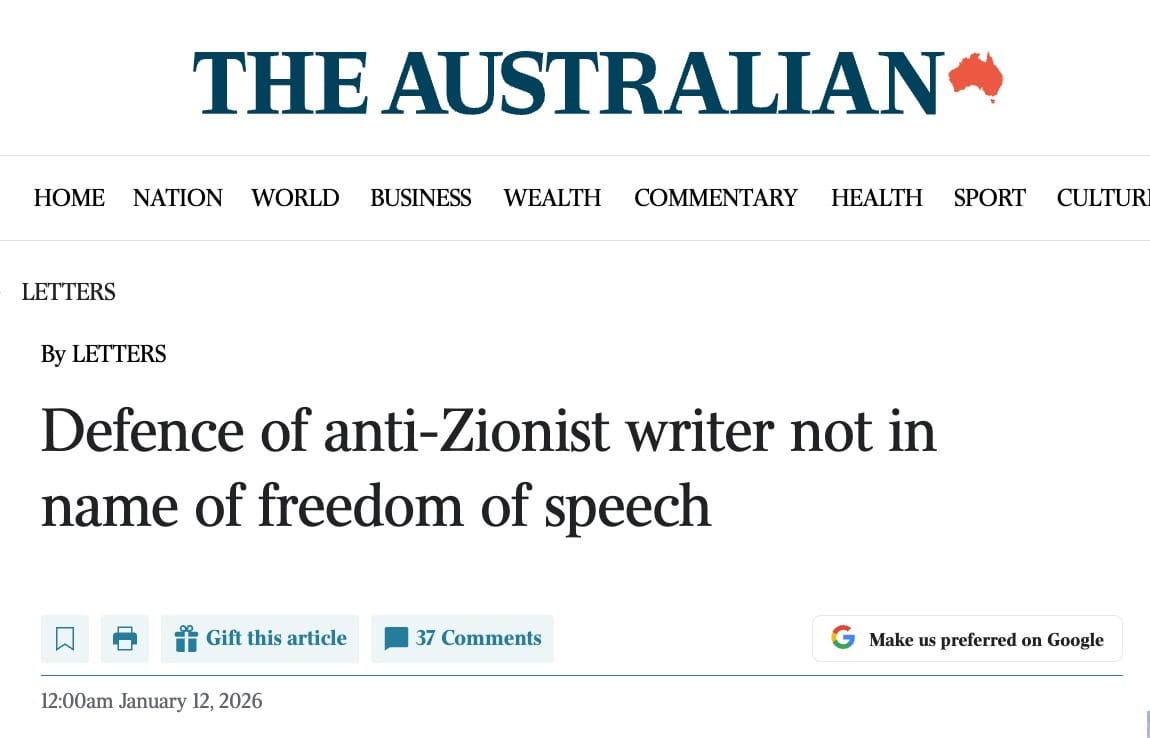
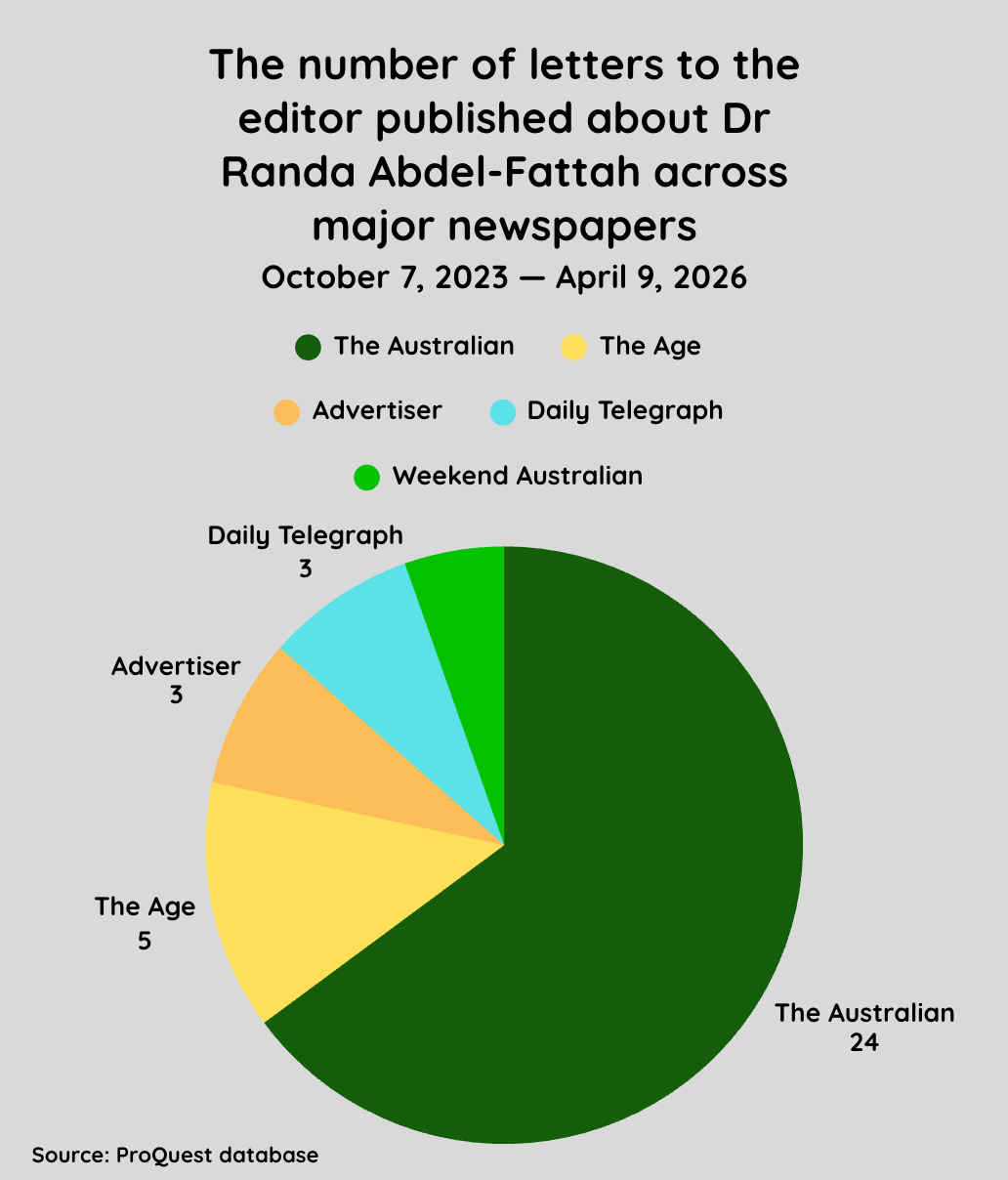
Then comes the echo chamber. The Australian published 24 letters to the editor about Abdel-Fattah, which means letters in this Murdoch national broadsheet accounted for nearly two-thirds of the total 37 Randa-related letters to the editor across all major newspapers.
The next closest? The Age, with just five.
Combined with the paper’s tone and volume, this pattern points to feedback loop- coverage that provokes outrage, then showcases that outrage as apparent evidence of widespread concern.
The disconnect: a campaign out of step with reality?
In addition to her criticisms of Israel’s war crimes, Abdel-Fattah believes being a woman who is Palestinian and Muslim makes her a prime target for The Australian.
This follows another familiar News Corp pattern. In 2017–18, an analysis of media coverage published in Crikey found The Australian and The Daily Telegraph were behind the most frequent and vitriolic coverage of Yassmin Abdel-Magied over this quickly deleted ANZAC Day post on her personal Facebook page:
LEST. WE. FORGET. (Manus, Nauru, Syria, Palestine …).
What began as a single remark was relentlessly amplified into a prolonged campaign, pressuring politicians and institutions to cut ties with her, which contributed to her eventual departure from Australia.
The sustained, and recently intensified, attacks on Abdel-Fattah appear increasingly at odds with public sentiment and real-world outcomes where efforts to sideline her — despite having the ear of politicians and leaders — have repeatedly backfired.
Her 2026 Adelaide Writers’ Week dis-invitation, which linked Abdel-Fattah to the Bondi terror attack that left 15 people dead, sparked a mass boycott of more than 180 writers, collapsing the event and forcing an apology and leadership resignations. Abdel-Fattah was invited to attend the festival in 2027.
A similar boycott took place at the Bendigo Writers Festival in August 2025 after writers were required, at the eleventh hour, to sign on to a code of conduct, widely seen as designed to silence criticism of Israel’s actions in Gaza.
Abdel-Fattah was the first to withdraw from the festival, sparking a mass boycott of around 50 writers, leading to widespread event cancellations and the near-collapse of the festival.
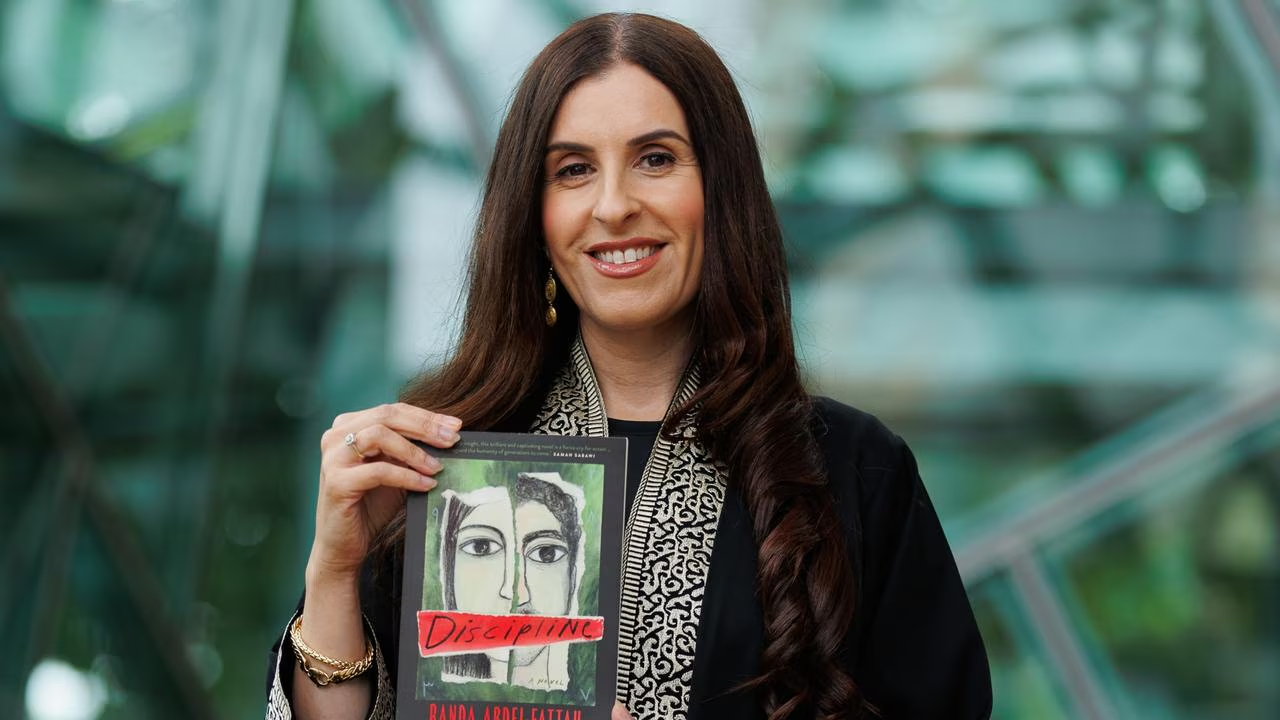
Recently, her appearances at the Newcastle and Sydney Writers’ Festivals sold out in a matter of days, leading to added shows. Abdel-Fattah’s latest novel, Discipline, is also in its third reprint due to demand.
This is not to minimise the personal and financial toll the smear campaign has taken on Randa Abdel-Fattah.
“It has often felt like death by a thousand cuts. If I can be targeted at the height of my academic and writing career, the message is unmistakable: no one is beyond reach,” she said.
The Australian did not reply to our emails.
Note on methodology: The analysis focused on major Australian news outlets, primarily print mastheads with an online presence, alongside key digital-only competitors (The Guardian and ABC News Online).
Outlets included:
- News Corp: The Australian, The Weekend Australian, Herald Sun, Daily Telegraph, Courier Mail, NT News, Mercury, Gold Coast Bulletin, Townsville Bulletin
- Nine: Sydney Morning Herald, The Age, Australian Financial Review, Brisbane Times, WAtoday
- Australian Community Media: Canberra Times, Newcastle Herald, Bendigo Advertiser, Illawarra Mercury, The Border Mail and The Advocate
- Digital/other: ABC News Online, The Guardian
Syndicated articles appearing across outlets within the same media group were counted, but duplicate versions of the same article (e.g. print and online repeats) were removed to ensure accuracy. Content from AAP was excluded.
CORRECTION: An earlier version of this story said one or more of the ten highly charged words (listed above) appear in more than 90% of News Corp headlines where Abdel-Fattah is an article subject. The research shows that if one or more of these words appeared in a headline on a story about Dr Abdel-Fattah, there's a 90% chance it was a News Corp story.
Join the Etterati to support independent journalism, strengthen media literacy as we push back against unfair narratives.